 admin 2 months ago
Binance Review 2026: Full Overview of the Binance Exchange
Cryptocurrencies continue to gain mainstream traction, leading to a proliferation of trading platforms. The landscape presents a diverse array of options, ranging from interfaces designed for those new to the space to sophisticated terminals catering to seasoned investors. Selecting the right exchange requires careful consideration of these varying feature sets. This analysis provides a comprehensive examination of a specific platform to help you determine if it aligns with your trading strategy.
We will begin by exploring the origins and evolution of this exchange, tracing its path to becoming a leading entity in the digital asset market. Following that, we will review the distinct advantages and potential limitations associated with its use.
Furthermore, a practical guide will detail the procedures for depositing funds, executing trades, and withdrawing assets, supported by visual aids for clarity. By the conclusion of this review, you will possess the necessary insights to navigate the platform effectively.
Executive Summary:
This exchange distinguishes itself through its comprehensive suite of trading services, supporting spot, margin, futures, and automated bot trading. It facilitates broad market access by allowing deposits in over 30 fiat currencies and enabling the purchase of digital assets with more than 100 fiat options. Transaction methods are versatile, including debit/credit cards, wire transfers, and peer-to-peer payments. The platform maintains rigorous security protocols, providing a reliable environment for managing your portfolio.

Tiago Amaral
Co-Founder at Inevitable Future Institute
What are the key factors to consider when choosing a cryptocurrency exchange for trading NFTs?
It is important to know who the team and investors behind the company are. In a world full of scams, new platforms emerge every day, and it is always important to look for those with a reputable presence in the market. Additionally, basic security concerns, such as the permissions being granted by the wallet to the exchange, are also crucial points to consider.
Pros
- A very well-known crypto exchange platform
- More than 500 different cryptos available
- Two-factor authentication
- Extensive trading options
- Emphasis on security and KYC
- Supports fiat-crypto acquisitions
Cons
- Reports of mediocre customer support
What is Binance?
Binance stands as a centralized exchange that facilitates both crypto-to-fiat and crypto-to-crypto transactions. Essentially, it accepts traditional, real-world currencies, including the U.S. dollar (USD) and the Euro (EUR).
The platform was established in 2017, initially based in China. However, due to the stringent regulatory environment regarding cryptocurrency within the country, the company relocated to Japan, before eventually settling in Malta. Currently, Binance operates without a specific official headquarters.
The platform was founded by Changpeng Zhao, commonly referred to as CZ. His background includes work with trading systems at the Tokyo Stock Exchange, a foundation that undoubtedly contributed to Binance’s architectural success. Although CZ [relinquished his role as CEO in November 2023], he remains the largest shareholder, with Richard Teng now serving as the current CEO.
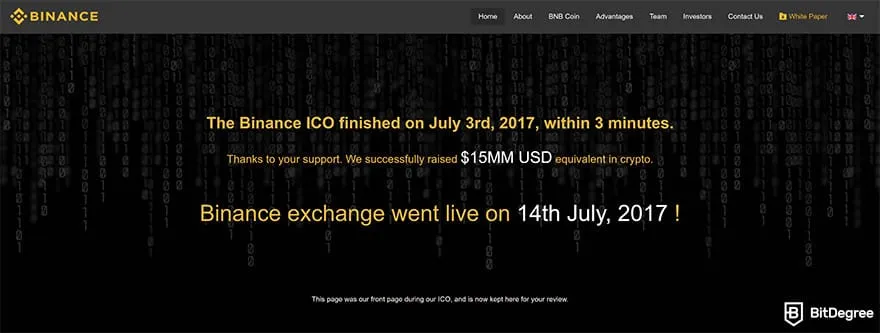
Prior to launching the trading exchange, Binance secured capital through an initial coin offering (ICO). This fundraising method mirrors crowdfunding, allowing early supporters to invest in a startup’s potential.
However, the ICO model is distinct because participants contribute cryptocurrency rather than fiat currency. During the 2017 boom, where total ICO investments exceeded $5 billion, Binance successfully raised approximately $15 million. In exchange for this backing, contributors received a proprietary crypto token known as [Binance Coin (BNB)].
Although it was designated as a "coin" from the outset, BNB initially functioned as a [token] built upon the Ethereum blockchain. Subsequently, Binance introduced its own proprietary blockchain, facilitating the migration of BNB to this new environment. Now, it operates natively on the BNB Chain, solidifying its status as a true coin.
Why Binance?
The trajectory of Binance’s growth has been nothing short of extraordinary. In January 2018, the platform’s popularity surged to the point where it had to temporarily halt new user registrations due to an overwhelming influx of applicants. On a single day, Binance received over 240,000 new applications. As the years progressed, its user base expanded even further, eventually growing to encompass over 255 million traders worldwide—a number that continues to rise.
Binance functions as far more than a simple trading venue. It has evolved into a comprehensive ecosystem offering a wide array of features. A prime example is its suite of digital asset storage solutions, which includes:
- The Binance Wallet: This is the exchange’s integrated custodial wallet, allowing users to conveniently manage their assets directly within the Binance platform.
- The Binance Web3 Wallet: While also built into the exchange, this self-custody wallet is designed for interacting with the broader decentralized web, opening up a world of external use cases.
Having explored the platform’s history and core functionalities, you now possess a solid understanding of its foundation. However, to truly grasp its value proposition, we must delve deeper and examine the specific reasons why you might choose Binance for your trading needs.
Why Binance?
Before committing to any cryptocurrency exchange, it is imperative to conduct a thorough evaluation of its strengths and weaknesses. This due diligence is crucial to ensure the platform you select aligns perfectly with your individual requirements and trading objectives.
Advantages of Binance
Let us first examine the primary benefits of employing this cryptocurrency trading platform.
- Extensive Selection of Digital Assets
With the global cryptocurrency market expanding rapidly, the need for a platform that offers a wide variety of assets is paramount. Binance stands out due to its comprehensive list of supported coins and tokens, catering to both mainstream and niche investors.
The platform supports over 500 different cryptocurrencies, including NFTs. The selection encompasses major market leaders such as Bitcoin (BTC), Dogecoin (DOGE), Ethereum (ETH), and Litecoin (LTC), as well as emerging assets like Shiba Inu (SHIB) and ICON (ICX). Naturally, the platform’s native token, Binance Coin (BNB), is also fully supported.
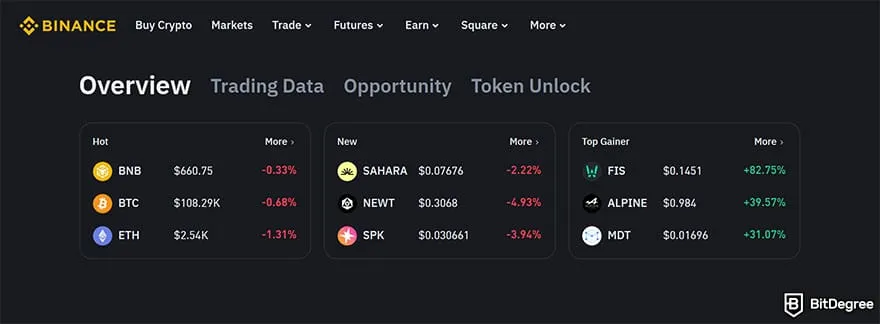
Although other exchanges may claim a wider variety, Binance distinguishes itself through a rigorous vetting process. This ensures that the assets listed on the platform possess a high degree of legitimacy and reliability.
- Competitive Fee Structure
Binance is renowned within the industry for its exceptionally low transaction costs. When engaging in crypto-to-crypto trading, the platform charges a standard fee of 0.1% per trade. To illustrate, a transaction of 1 ETH would incur a fee of merely 0.001 ETH.
Furthermore, user fees are reduced progressively as trading volume increases and VIP levels are unlocked. A significant advantage is the 25% discount on Spot and Margin trading fees available to users who utilize BNB to pay for their transaction costs.
📚 Learn More: Binance Fees
Regarding account funding, deposits are processed without charge, whereas withdrawals incur standard network fees. This fee structure is consistent across most reputable exchanges. It is important to note that withdrawal fees vary by cryptocurrency and fluctuate according to market valuation.
For instance, withdrawing Litecoin (LTC) from the BNB Chain currently costs 0.006 LTC. However, if the market value of Litecoin rises, the fiat equivalent of this withdrawal fee will also increase. This is because the fee is fixed to the asset’s value rather than a specific fiat currency amount.
Table: The pricing options on Binance
While there are no upper limits on deposit values, withdrawing cryptocurrency requires account verification. This security measure involves submitting identification documents, such as a passport, to ensure the safety of user funds.
- Comprehensive Fiat Support
Advantages of Binance
Binance initially focused solely on cryptocurrency transactions. However, recognizing the need for broader accessibility, the platform integrated major fiat payment systems in 2021, such as SEPA and the Faster Payments Service (FPS). This strategic move opened the door for EUR and GBP transactions. Currently, the exchange facilitates deposits in more than 30 fiat currencies and supports payments in over 100 currencies through its "Buy & Sell" feature.
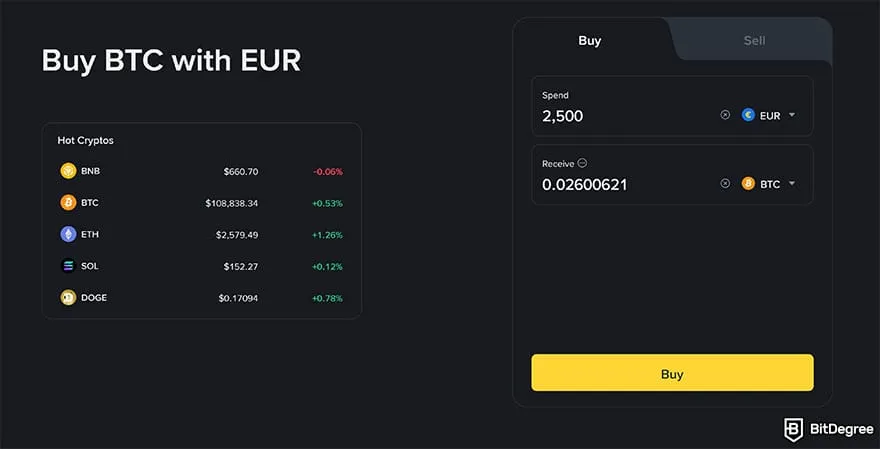
Beyond standard bank transfers, Binance offers a versatile array of payment methods. You can utilize debit or credit cards, and even participate in P2P transactions. This flexibility ensures that even those purchasing cryptocurrency for the first time will find the process seamless and user-friendly.
- Various Ways to Earn
For users seeking more than just trading tools, Binance provides a robust ecosystem for generating passive income and rewards.
Active traders on the platform frequently have the opportunity to participate in limited-time events offering significant prizes. These incentives vary widely and have historically included valuable cryptocurrencies, such as Waves (WAVES) and Ontology (ONT). In some notable instances, the exchange has even given away luxury items like high-end vehicles.
Furthermore, through Binance Academy, users can engage in educational tasks to receive crypto rewards. This "learn-to-earn" model is an excellent entry point for newcomers. If this concept appeals to you, you might also appreciate the educational opportunities available through BitDegree Missions.

As noted in this review, the platform caters to a diverse user base, extending its utility to experienced investors through Binance Earn, which is categorized into Simple Earn and Advanced Earn tools.
Simple Earn encompasses both flexible and locked savings products, allowing users to accrue interest with minimal risk. Flexible products offer liquidity with the ability to withdraw funds at any time, whereas locked products commit assets for a specific duration in exchange for higher yields. For long-term holders, this serves as an effective strategy to generate a steady stream of income while retaining ownership of their assets.
Conversely, Advanced Earn presents more sophisticated and riskier instruments, such as Dual Investment and Smart Arbitrage. While these options have the potential to yield higher returns, they also introduce a greater degree of market uncertainty.
📚 Read More: Binance Earn
Another notable feature is Binance Megadrop, which allows users to complete specific tasks to earn points, thereby qualifying them for airdrops of tokens that have not yet been officially listed.
- IEO Launchpad & Launchpool
Binance has established a strong reputation for rapidly listing new cryptocurrencies following the conclusion of their Initial Coin Offering (ICO). However, the exchange employs rigorous vetting processes; a project must demonstrate its legitimacy and fundamental strength to secure a listing on the platform.
Token Listing and Launchpad
Speaking of new token listings, Binance provides an IEO-based token Launchpad, enabling projects to incubate their assets and hold crowdfunding events. Many have introduced their tokens through this tool (such as the HMSTR token), demonstrating that Binance is frequently regarded as a preferred exchange, not only by traders.
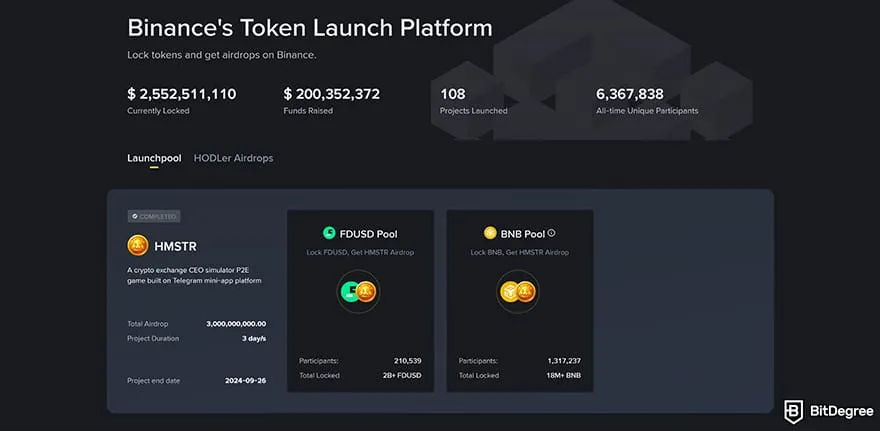
In addition to the Launchpad, there is also the Launchpool, where you can stake your crypto, such as BNB or BUSD, into specific pools and earn rewards in the form of new project tokens. This represents a straightforward and low-risk approach to exploring new cryptocurrencies while keeping your assets secure. Furthermore, you can withdraw your staked funds at any time!
- Robust Security
Binance takes security very seriously. For instance, all customers are required to set up two-factor authentication (2FA) upon registering an account. This adds a layer of protection by sending a special code to your mobile device whenever you attempt to log in, trade, or withdraw funds.
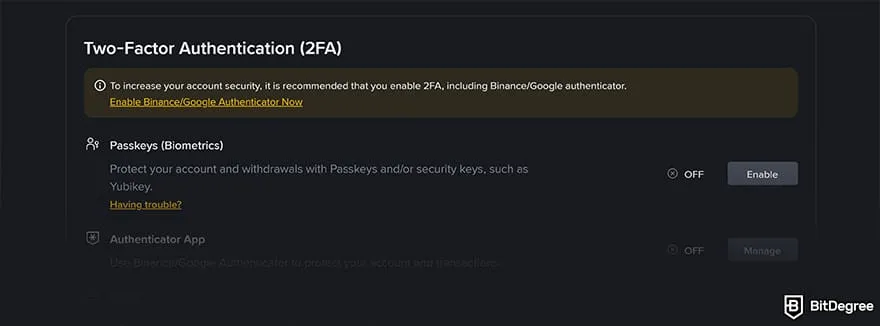
Of course, this alone does not fully answer the question “Is Binance safe?”. Therefore, let us examine other security measures it implements:
- Adheres to the Cryptocurrency Security Standard (CCSS), an internationally recommended security standard[1] for crypto exchanges;
- Stores the majority of users’ funds offline in cold wallets for protection;
- Detects suspicious activity and suspends withdrawals for 24-48 hours if necessary;
- Ensures that only you can access your personal data through end-to-end encryption;
- Monitors password and email change requests with a dedicated system to prevent unauthorized access.
These features ensure that your account and funds remain secure. However, even if Binance were to face hacking incidents, it maintains the Secured Asset Fund for Users (SAFU) to cover losses incurred during malicious activities.
- High Trading Volume
As Binance has established itself as one of the most popular exchanges to buy, trade, and sell cryptocurrencies, a significant volume of trades occurs continuously. Consequently, its trading volume is exceptionally high, particularly when compared to other exchanges.
This serves as a key advantage, as high trading volume means high liquidity,[2] granting you the ability to execute your buy or sell transactions immediately whenever necessary.
Disadvantages of Binance
While the platform possesses numerous strengths, it is prudent to consider certain limitations. Some users have pointed out areas where the exchange could enhance its services, particularly in the realm of customer assistance. Despite these points, Binance continues to be a prominent choice for many, largely due to its powerful infrastructure capable of handling up to 1.4 million transactions per second. This high-throughput capability ensures that even in a highly active market, the system remains robust and efficient, directly impacting the ease with which you can execute trades.
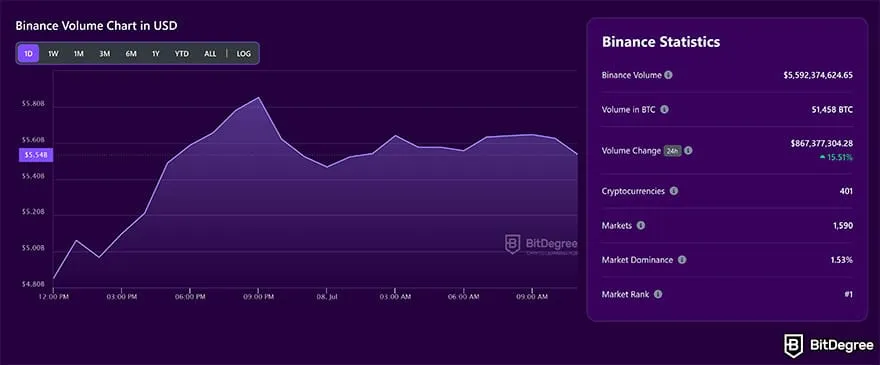
For instance, if you wish to acquire a digital asset with low trading volume, the scarcity of sellers can make the process challenging. Conversely, high liquidity, driven by a large number of participants, facilitates seamless transactions. The platform’s underlying technology is engineered to support such high-volume activity, ensuring that the market remains dynamic and accessible.
Customer Support
A primary point of concern for some individuals revolves around the exchange’s customer support system. While assistance is accessible through email or live chat channels, anecdotal evidence suggests that response times can occasionally be prolonged, a likely consequence of the platform’s extensive global user base. It is also noteworthy that, unlike some of its competitors, dedicated telephone support is not available, a feature that certain other prominent exchanges provide.

How to Use Binance?
Having navigated through this comprehensive review of Binance, you should now possess a solid understanding of its operational framework, its core strengths, and its potential drawbacks. The following section will provide a clear, step-by-step guide on how to effectively utilize the platform for your trading activities.
How to Open an Account at Binance?
To begin trading on Binance, you must first establish an account and complete the initial identity verification tier. We will proceed with the account creation process, after which I will guide you through depositing funds and executing trades.
STEP 1:
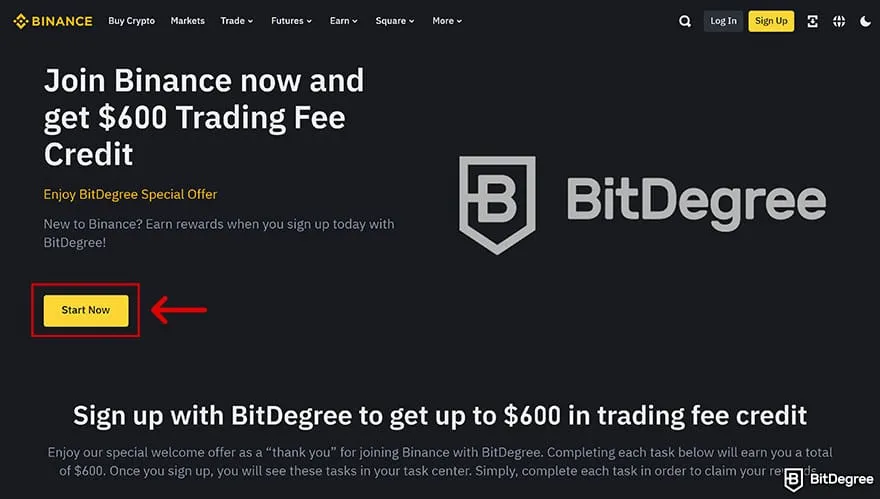
Navigate to the Binance official website and select the [Start Now] button.
STEP 2:
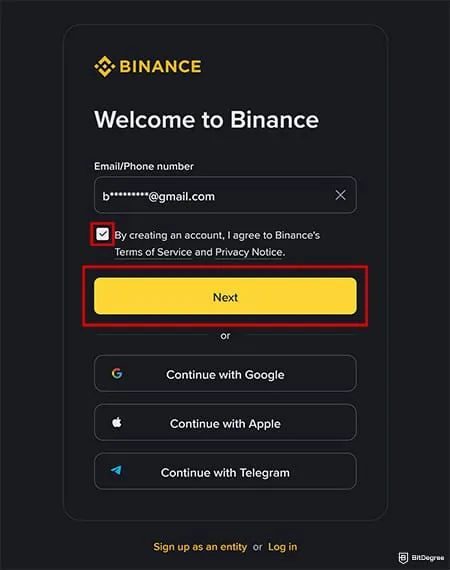
Input your email address, accept the Terms of Service & Privacy Policy, and click [Next].
STEP 3:
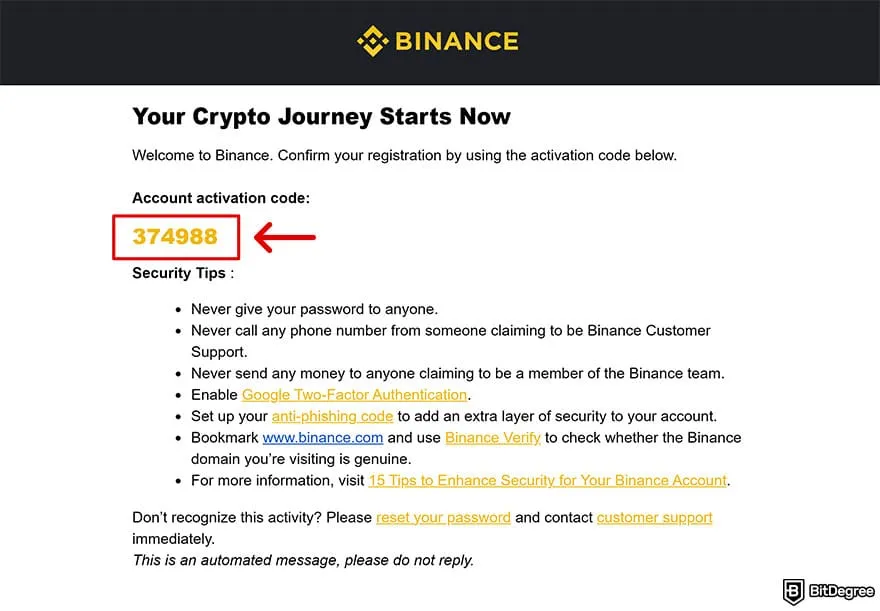
Retrieve the verification code sent to your email inbox.
STEP 4:
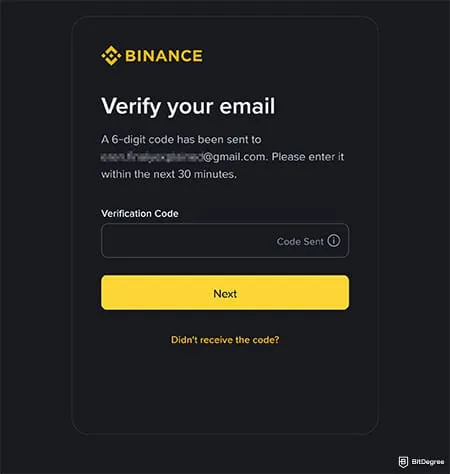
Paste the received code into the designated field on the registration page.
STEP 5:
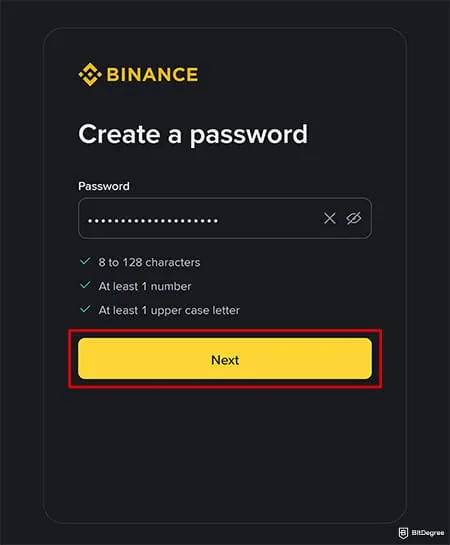
Establish a robust yet memorable password. Ensure it consists of at least 8 characters, including a combination of uppercase letters and numerals.
STEP 6:
Upon your first login, a prompt will appear requesting the configuration of two-factor authentication (2FA). Recall the security benefits of this feature discussed earlier?
Please enter your mobile number to finalize the setup.
STEP 7:
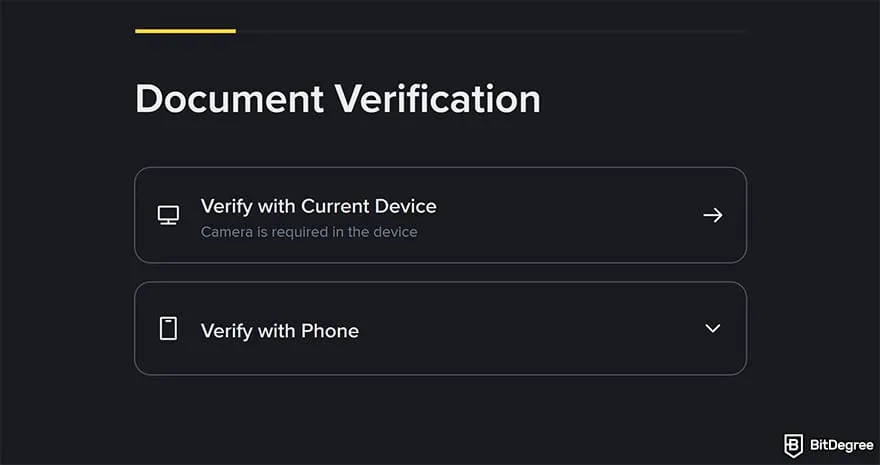
As noted, identity verification is required to unlock the platform’s full capabilities. While you may browse certain features without verification, you must complete the KYC process to deposit funds or engage in trading.
📚 Learn More: How to Pass KYC Checks on Binance
How to Deposit Funds at Binance?
As noted in our review, the exchange facilitates fiat deposits through various payment channels, including debit cards and bank transfers. Consequently, before initiating trades, you must fund your account.
Fiat Deposits
To deposit fiat currency into your account, please proceed with the following instructions:
STEP 1:
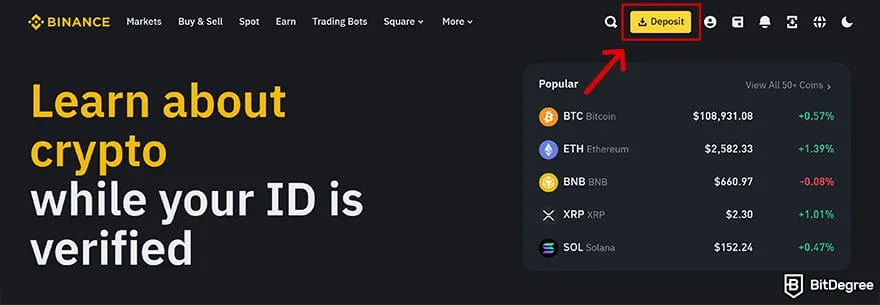
Navigate to the Homepage.
Locate and click the [Deposit] button situated in the upper-right corner of the website interface.
STEP 2:
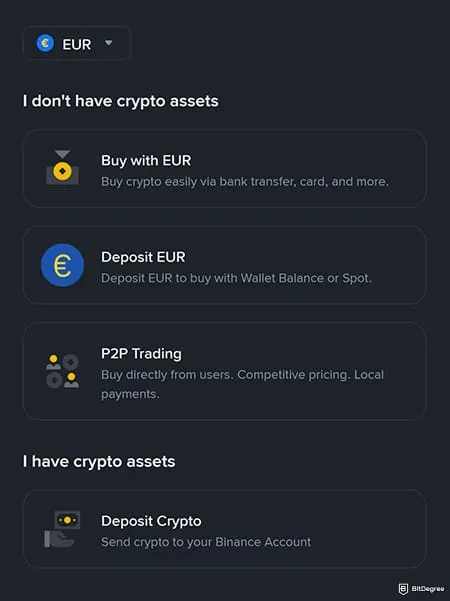
Select the Deposit Category.
Upon clicking the Deposit button, a dedicated window will appear prompting you to select the type of deposit. For this demonstration, we selected the Deposit EUR option to facilitate immediate usage within the integrated wallet. Alternatively, you may opt to deposit crypto or utilize the direct purchase feature using cryptocurrency.
STEP 3:
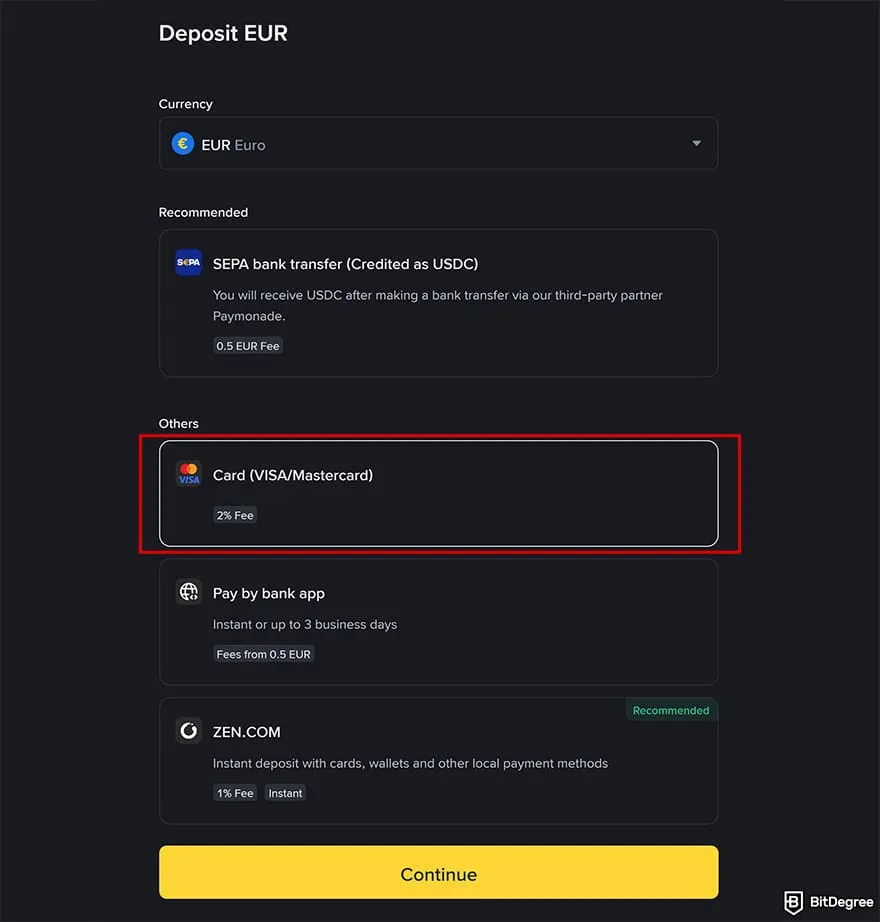
Specify Currency and Payment Gateway.
You are now required to select your preferred currency and the corresponding payment processor.
We recommend utilizing the credit card method for its convenience. However, for substantial deposits, a bank transfer may offer a more cost-effective and swift alternative. Note that utilizing the bank transfer method necessitates completing advanced identity verification, as standard verification will not suffice.
STEP 4:
Input Transaction Details.
Proceed by entering the specific amount you wish to deposit and providing the necessary card details if you selected the bank card option.
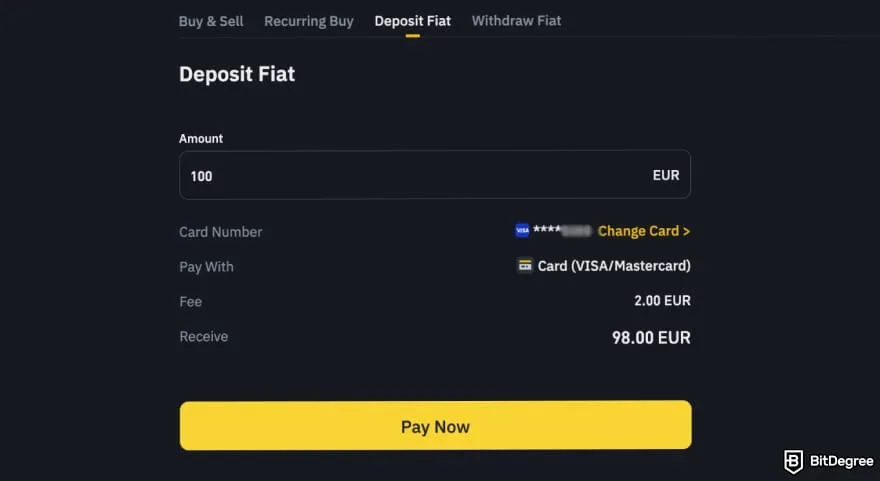
STEP 5:
Verify Wallet Update.
Once completed, simply click [Pay Now]. The funds will be credited to your fiat wallet almost instantaneously.
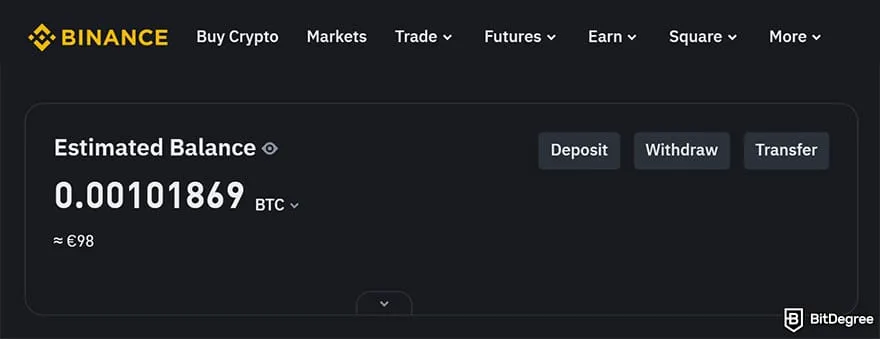
Crypto Deposit
If you prefer to fund your account using digital assets rather than fiat currency, please adhere to the following procedure:
STEP 1:
Navigate to the "Deposit" section within your Binance dashboard and select [Deposit Crypto] to initiate the transfer process.
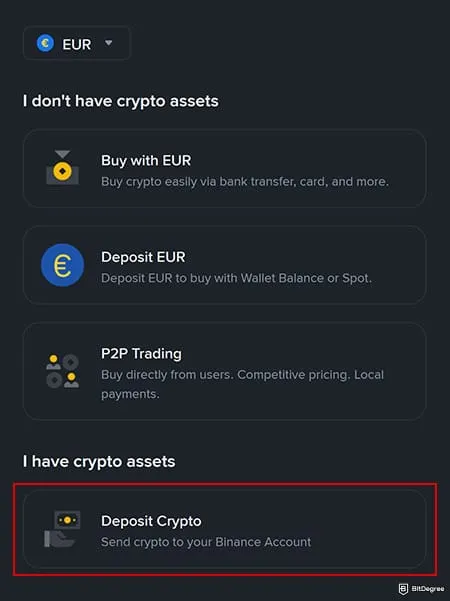
STEP 2:
Select the specific cryptocurrency you intend to deposit into your Binance account.
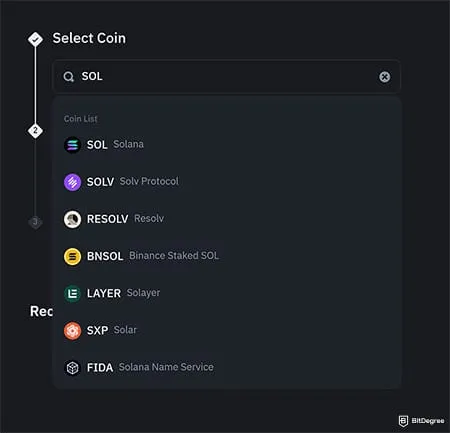
STEP 3:
Upon selection, the system will generate a unique deposit address for that asset. Please copy this address accurately and verify the string of characters to prevent errors.
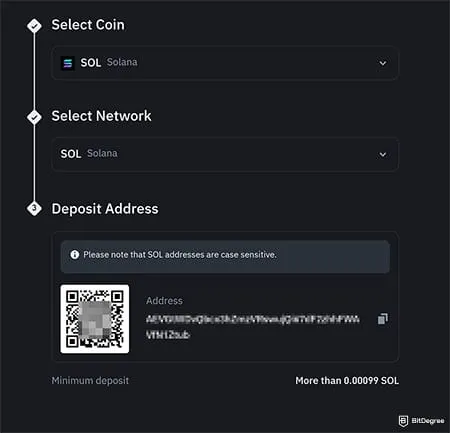
STEP 4:
Access your external wallet or exchange, paste the Binance deposit address into the withdrawal field, and specify the quantity you wish to transfer.
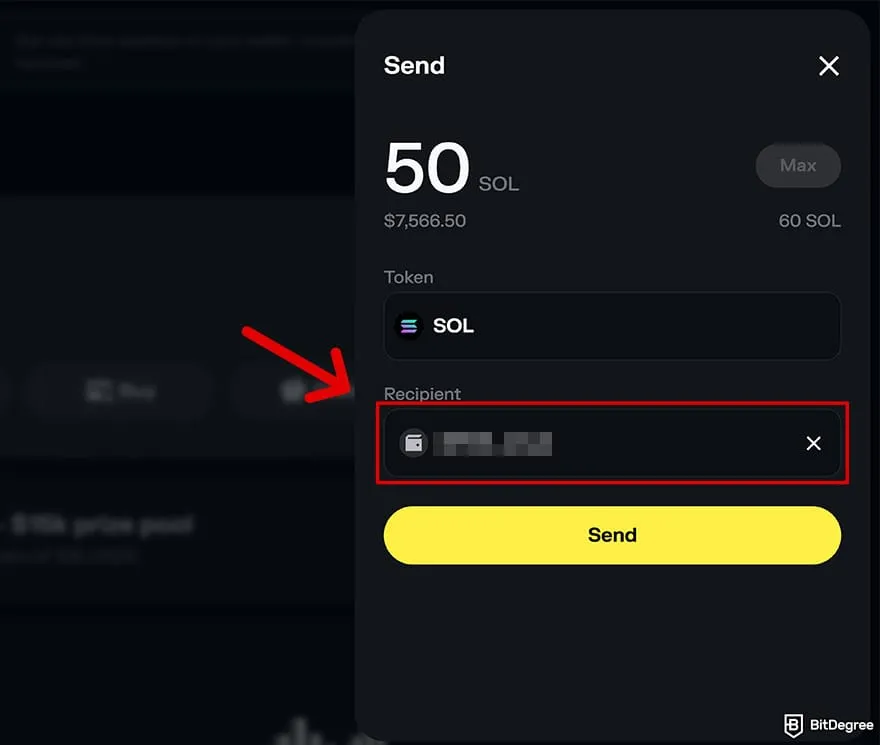
STEP 5:
Prior to finalizing the transaction, conduct a thorough review of the destination address. It is imperative that the funds are sent exclusively to the verified Binance deposit address to ensure the security of your assets.
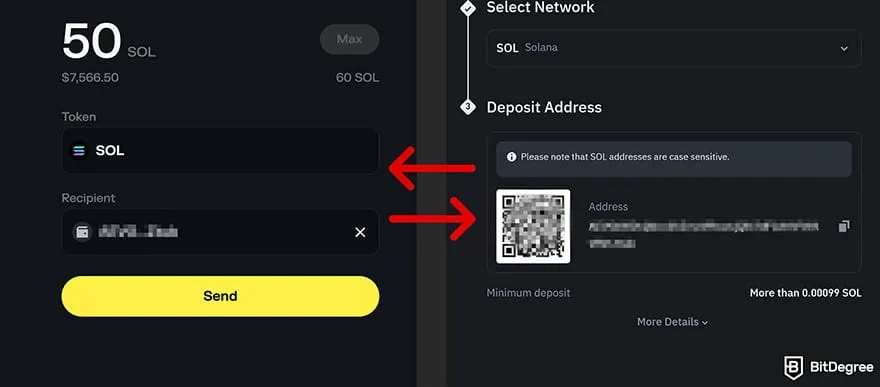
Once the transaction is confirmed on the blockchain, Binance will automatically update your Total and Available balances to reflect the incoming deposit.
Your account is now successfully funded, and you may proceed to execute your initial trading activities.
How to Execute a Trade on Binance?
Having successfully funded your account with fiat or cryptocurrency, you are now ready to execute your first trade. The platform offers access to an extensive selection of over 500 different cryptocurrencies. For the purpose of this guide, we will demonstrate the process of purchasing Bitcoin (BTC).
Please note that the procedure for acquiring any other digital asset is identical; simply substitute Bitcoin with the specific cryptocurrency you intend to buy.
STEP 1:
Access the Spot Trading Interface.
Navigate to the "Trade" dropdown menu located on the main homepage. You do not need to click it immediately; simply hover your cursor over the menu to reveal the options. From there, select the "Spot" tab to proceed.
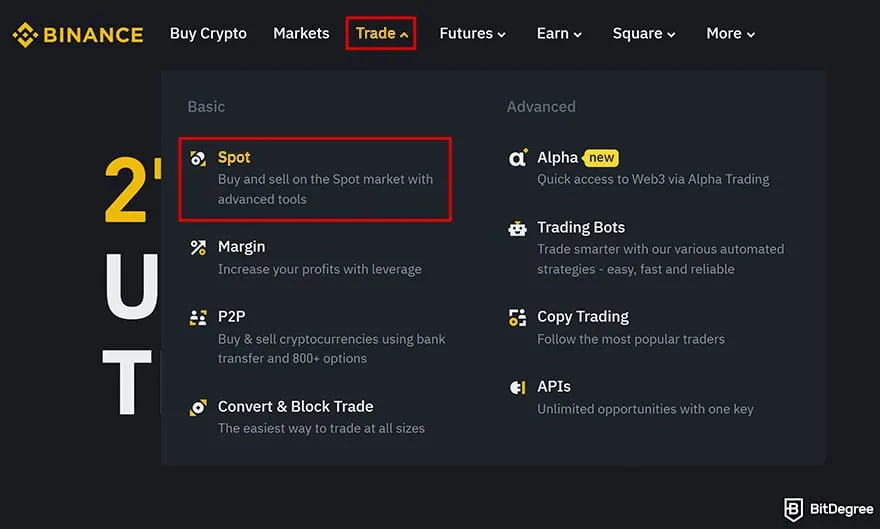
STEP 2:
Select a Trading Pair.
Identifying the correct trading pair may seem daunting for newcomers, but the process is quite straightforward. Upon entering the Spot trading dashboard, the system defaults to the BTC/USDC pair. While we will use this pair for our example, you can view and select from all available pairings—including fiat-to-crypto options— in the upper right corner of the interface.
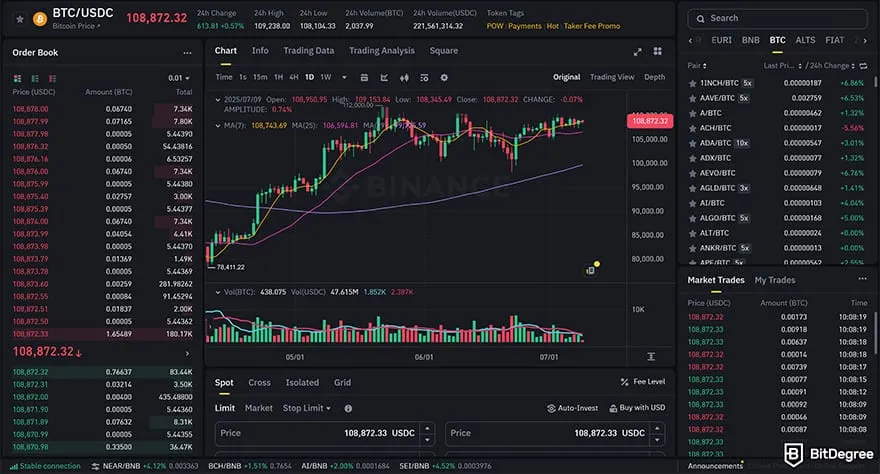
STEP 3:
Navigate to the Purchase Section.
After selecting your desired currency pair (BTC/USDC in this case), scroll down to the order panel. If you do not currently hold USDC, you may click the plus (+) icon adjacent to the USDC balance to purchase or deposit funds. This functionality operates exactly as previously described.
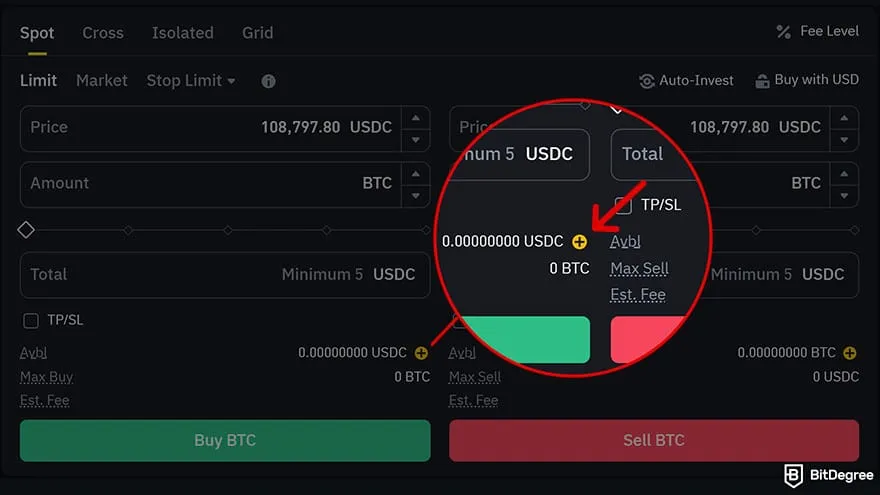
STEP 4:
Determine the Order Type.
The trading chart will display the market data for your selected pair. Locate the "Buy BTC" section below the chart and ensure the Market order type is selected.
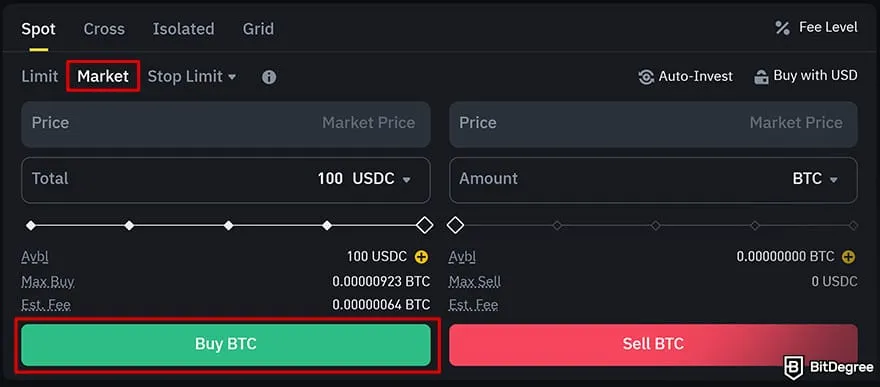
Why choose "Market" over "Limit"? A Market order executes your trade immediately at the best available current price. Conversely, the Limit order option allows you to set a specific target price for execution, a strategy typically reserved for experienced, short-term traders.
STEP 5:
Finalize the Transaction.
To complete the purchase, enter the quantity of the asset you wish to acquire. You have two methods to do this:
- Manually input the exact amount of the cryptocurrency you desire.
- Utilize the percentage slider to allocate a portion of your available balance. For instance, if you wish to convert your entire 50 USDC balance into Bitcoin, simply select the 100% option.
How to Trade on Binance?
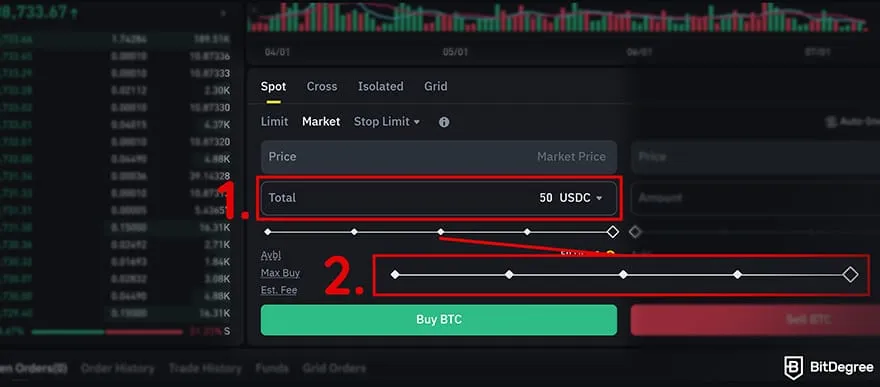
To finalize your transaction, press the green [Buy BTC] button. Since you have opted for the Market order type, the execution should be instantaneous, typically completing within a few seconds. To verify the success of your transaction, you may navigate to the Wallet > Overview section.
Congratulations, you have successfully executed your first cryptocurrency exchange!
How to Withdraw from Binance?
Having familiarized yourself with the trading process, you might now wonder how to withdraw your assets from the platform. The following steps detail this procedure:
STEP 1:
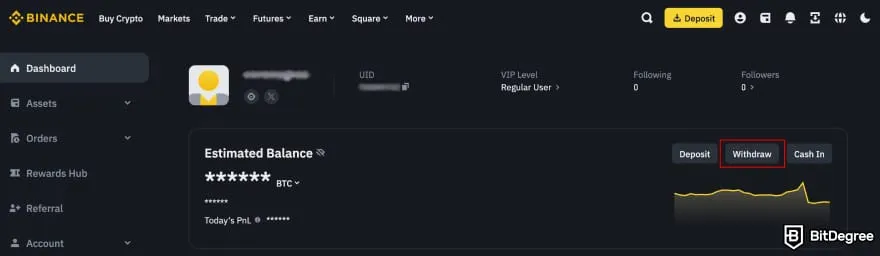
Locate the profile icon in the upper-right corner of the interface. Upon clicking it, you will be directed to your account dashboard. Proceed by selecting the [Withdraw] option.
STEP 2:
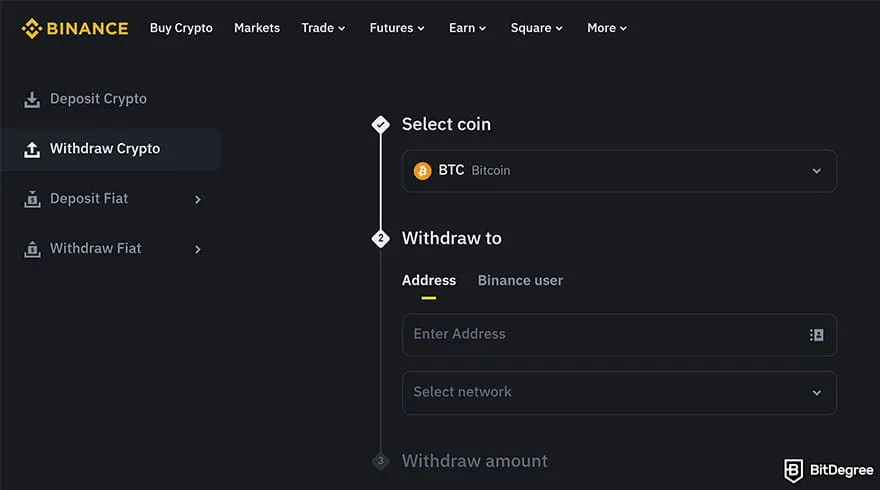
Choose the specific cryptocurrency you intend to transfer out of your account.
STEP 3:
Input the destination wallet address where the funds will be sent.
Exercise extreme caution to ensure the address is accurate, as errors may result in irreversible loss of funds. It is highly recommended to copy and paste the address directly to avoid manual entry errors.
STEP 4:
Finally, specify the amount of coins to withdraw, verify the selected network, and confirm the transaction.
Binance withdrawals are typically processed swiftly, usually arriving at the destination wallet within 30 minutes. Please note that processing times may extend during periods of high network congestion.
Who Should Use Binance?
Binance caters to a wide spectrum of users, ranging from those new to cryptocurrency to seasoned market participants. The platform achieves this versatility by offering two distinct interfaces designed for different levels of expertise: Lite and Pro. As the names suggest, Binance Lite provides a streamlined entry point for beginners, while Binance Pro unlocks the full suite of tools required for complex trading strategies.
Beyond standard spot transactions, the exchange facilitates margin trading, copy trading, and futures trading. Furthermore, users have the capability to implement automated strategies through the use of trading bots!
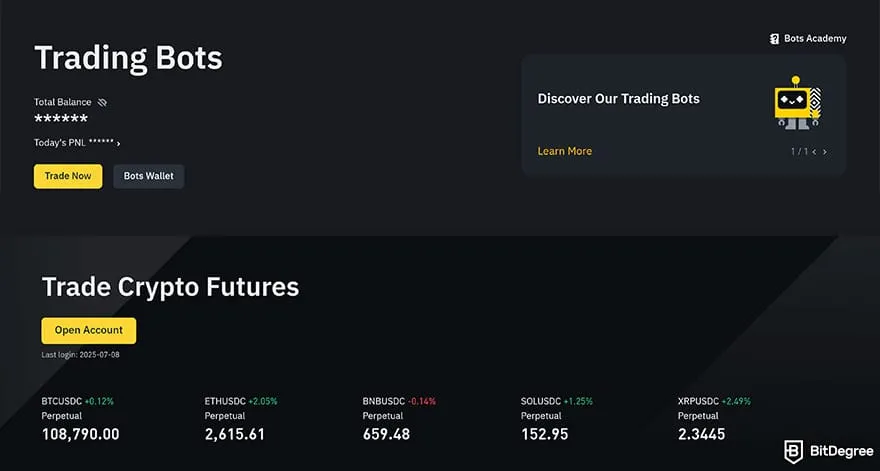
It is imperative to recognize the complexity and associated risks of these advanced instruments. To safeguard inexperienced users, high-risk functionalities such as futures and margin are strictly limited to the Binance Pro interface. Transitioning between the two modes is effortless; a simple tap on the profile icon within the application allows for instant switching. There are no prerequisites, such as completing specific tasks or maintaining a minimum asset balance, to access the Pro version.
Binance Lite vs. Binance Pro
| Feature | Binance Lite | Binance Pro |
|---|---|---|
| Target Audience | Beginners | Advanced users |
| Interface | Simplified, user-friendly | Advanced, detailed, feature-rich |
| Trading Options | Basic trading (buy/sell only) | Comprehensive options (spot, margin, futures, trading bots, options and more) |
| Market Data | Limited and simple display | Real-time charts, in-depth market data, and analysis tools |
| Additional Features | None | Access to Binance Earn, Launchpool, and other advanced features |
Table: Comparison of features between Binance Lite and Binance Pro
For experienced traders, the Pro interface offers granular control and detailed statistical insights. Those analyzing the price movements between Bitcoin and Ethereum will find sophisticated charting tools indispensable.
For instance, candlestick charts provide a visual representation of the opening, highest, lowest, and closing prices of a cryptocurrency over a specified time frame.
Ultimately, while both versions are capable, novices are advised to commence with the Lite version to build confidence before transitioning to the more complex Pro environment.
Conclusions
Having thoroughly examined this comprehensive review, you are now equipped to make an informed decision on whether this platform aligns with your trading requirements. The ecosystem presents compelling advantages; however, it is prudent to acknowledge certain limitations, most notably the absence of telephonic customer support.
Regardless of your final choice, you now possess the requisite knowledge to navigate this exchange effectively, managing the entire lifecycle of your assets from deposit and trade to withdrawal.
From an analytical standpoint, this exchange stands among the premier platforms for cryptocurrency trading. It delivers a robust, user-centric interface capable of satisfying the diverse needs of the trading community. Furthermore, it represents an infrastructure where security and liquidity converge.
The content provided herein is strictly for informational purposes and should not be construed as financial, investment, or trading advice. The publisher does not advocate for the purchase, sale, or retention of any digital asset. All investment decisions carry risk, and professional financial consultation is strongly advised.
Scientific References
-
Y. Suga, M. Shimaoka, M. Sato, H. Nakajima: ‘Securing Cryptocurrency Exchange: Building up Standard from Huge Failures’;
-
D. Bianchi, M. Babiak, A. Dickerson: ‘Trading Volume and Liquidity Provision in Cryptocurrency Markets’.

